
Matter of C-A-R-R-: BIA Clarifies What Counts as an “Incomplete” Asylum Application
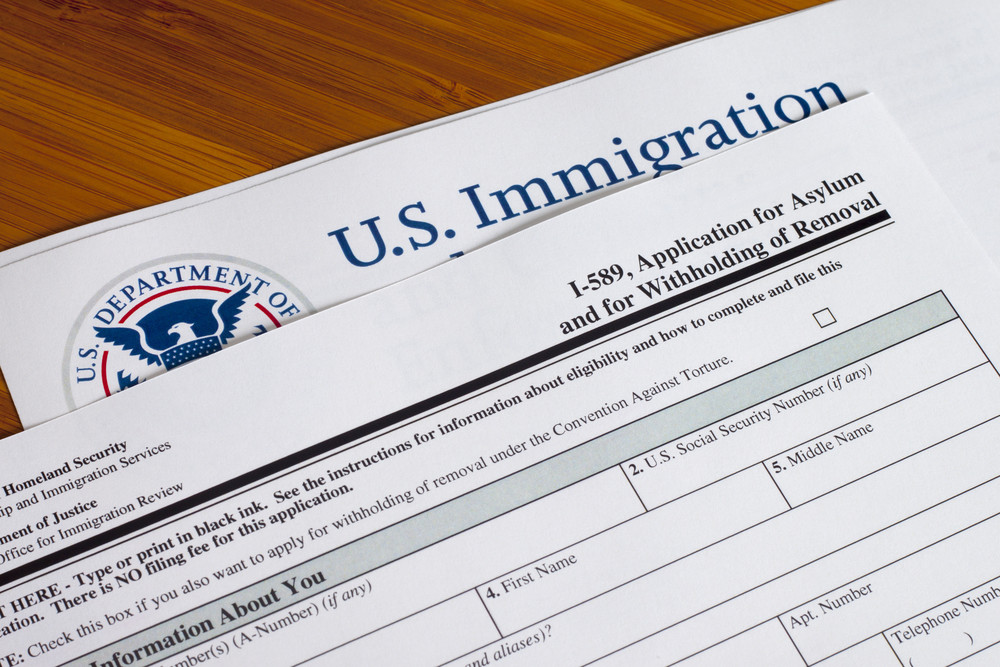
The Board of Immigration Appeals (BIA) recently issued an important decision in Matter of C-A-R-R-, offering long-needed clarity on when an Immigration Judge (IJ) may treat an asylum application as incomplete or abandoned.
This case is especially significant for asylum seekers and practitioners because it draws a firm line between what is required on Form I-589 and what is merely supporting evidence. Most notably, the BIA reaffirmed that a personal declaration—while often helpful—is not a mandatory component of a properly filed asylum application.
The decision builds on the principles established in Matter of Interiano-Rosa, and reinforces core due-process protections in immigration proceedings.
Background of the Case
The respondent, a Salvadoran national, had filed multiple Form I-589s over several years:
-
His first three applications were missing answers to important questions and were properly treated as incomplete.
-
His fourth application, however, contained all required responses. The issue arose because the declaration he submitted was in English, did not include the original Spanish version, and lacked the required certificate of translation.
The IJ concluded that these declaration defects meant the entire application was “waived and abandoned.”
The BIA disagreed—strongly.
Key Clarifications From the BIA
1. IJs May Reject Truly Incomplete Applications
The BIA reiterated that an IJ can decline to consider an asylum application if it lacks responses to mandatory questions or required elements listed in 8 C.F.R. § 1208.3(c)(3).
In this case, the respondent’s first three applications fit that category: they simply omitted required information.
But the fourth application did not.
2. A Declaration Is Not Part of Form I-589
This was the central holding. The BIA made clear that:
-
Form I-589 requires complete and responsive answers.
-
It does not require a separate written declaration.
-
A declaration is supporting evidence, not an essential component.
As the BIA put it, an IJ cannot deem an I-589 abandoned “solely because the respondent did not submit a declaration.”
This protects applicants from having their entire cases derailed because of technical defects in supplemental materials.
3. Missing Declarations Affect Evidence - Not Filing Validity
If an applicant does not file a declaration—or if the declaration is defective—the consequence is evidentiary, not procedural:
-
The applicant may lose the opportunity to add that evidence later.
-
The IJ may consider the missing or flawed declaration when assessing credibility or whether the burden of proof is met.
What the IJ cannot do is throw out the entire I-589 as abandoned simply because the declaration is missing or imperfect.
4. Cancellation of Removal: Denied for Lack of Good Moral Character
In addition to asylum, the respondent sought cancellation of removal. He admitted to selling cocaine in 2023.
Under INA §§ 101(f)(3) and 212(a)(2)(A)(i)(II), this admission counts as involvement in a controlled substance offense and automatically bars a finding of good moral character.
The BIA therefore upheld the denial of cancellation.
Practical Lessons for Applicants and Attorneys
1. Fill out every single field on Form I-589.
Even small omissions can lead to a finding of incompleteness.
2. Declarations are helpful, but not required.
They can strengthen a case, but the absence of one does not invalidate the filing.
3. If you submit a declaration in another language, follow translation rules.
Always include the original and a certified English translation.
4. Cure deficiencies promptly.
When the court gives a chance to correct errors, missing the deadline risks an abandonment finding.
5. Know the difference between completeness and evidentiary strength.
A case may be weaker without supporting documents, but the IJ must still adjudicate the application if the form is complete.
Why This Decision Matters
Matter of C-A-R-R- strengthens procedural fairness in asylum cases. It ensures:
-
Applicants are not penalized for mistakes in supporting documents,
-
Judges cannot impose extra-regulatory requirements, and
-
Cases are decided on their merits—not on technicalities.
This is especially important in a system where many applicants are pro se or face language and resource barriers.
Final Outcome of the Case
-
Asylum: The BIA sustained the appeal and sent the case back to the IJ for a full merits hearing.
-
Cancellation of Removal: Denied due to statutory ineligibility based on controlled-substance involvement.