
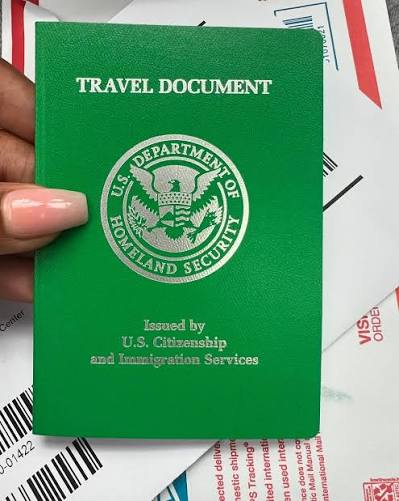
USCIS Approved Your Travel. Could a Trip Home Still End Your Asylum Case?
Matter of M-R-I- and the difference between travel permission and protecting a pending application
PKH Law Group | October 14, 2026
An approved travel document does not answer every question about an asylum applicant’s trip. Returning to the country where a person claims persecution can create a separate problem for the protection application, even when DHS has granted advance parole.
In Matter of M-R-I-, 30 I&N Dec. 137 (BIA 2026), decided October 7, 2026, the Board of Immigration Appeals addressed a return trip made while an application was pending. [1]
What was the case
A Nepalese applicant returned to Nepal on advance parole for about two months in 2016. He cited family concerns, his mother’s health, and the earthquake. His case remained pending. The Board upheld abandonment, noting the elapsed time since the events and his later ability to meet relatives in India. [1, pp. 137–140]
What did the Board rule
The Board held that return travel on advance parole to the country of claimed persecution abandons the pending application for asylum, withholding of removal, and CAT protection unless compelling reasons are established. Its analysis also includes CAT deferral. It dismissed the appeal and denied remand. [1, pp. 140–143]
The Board also held that the evidentiary record, rather than counsel’s arguments, governs the application of a mandatory bar to relief. [1, pp. 139–140]
The travel rule already in the regulations
Under 8 C.F.R. § 1208.8(a), an applicant who departs without first obtaining advance parole is presumed to have abandoned the application. Subsection (b) separately provides that an applicant who returns on advance parole to the country of claimed persecution is presumed to have abandoned the application unless compelling reasons are established. [2]
These are separate questions: whether the applicant obtained travel authorization, where the applicant traveled, and whether the applicant can establish the regulatory exception. M-R-I- expressly applies the abandonment framework to the protection application as a whole. [1, pp. 140–142]
Who should review travel plans
People with pending asylum applications should review any proposed international travel with their attorney, particularly travel to the country identified in their claim. The question is not limited to Nepalese applicants. USCIS’s travel guidance also addresses asylum applicants generally. [2, 3]
The documents and questions below organize that review. They are not a list of circumstances guaranteed to satisfy the compelling-reasons standard.
· Confirm whether the asylum application is still pending, whether removal proceedings or an appeal are pending, and which travel document is appropriate.
· Provide the exact destinations, travel dates, proposed length of stay, and reason for the trip.
· If a family or medical emergency is involved, bring dated records explaining the event, your relationship, and why your presence is necessary.
· Ask whether alternatives to returning to the country of claimed persecution are available.
· Ask separately about the effect on the protection claim and the requirements for returning to the United States.
If you have already traveled
Give your attorney the complete travel history, authorization documents, passport stamps, itinerary, and supporting records. Explain the trip truthfully and disclose it when required. Ask counsel to assess the applicable regulation and the evidentiary record before responding to questions about abandonment or your claimed fear.
What if asylum has already been granted
M-R-I- concerned a pending application; it did not directly decide termination of asylum already granted. USCIS guidance warns that an asylee, or a permanent resident who obtained status through asylum, may be questioned about return travel and, in some circumstances, face proceedings concerning asylum termination. [3]
USCIS generally instructs asylees to obtain a refugee travel document before departing. That document does not guarantee admission. The guidance should not be read as a guarantee that return travel is harmless. [3]
Termination is governed by separate legal grounds and procedures, including 8 C.F.R. § 1208.24. For termination in reopened court proceedings, the government must establish an applicable ground by a preponderance of the evidence. This is different from abandonment of a pending application. [4]
Which circuit issued the decision
M-R-I- was issued by the BIA, not a federal circuit court. The Board has nationwide administrative jurisdiction. Its published precedents generally govern agency adjudications, subject to controlling federal court authority. [5]
The opinion applies Fourth Circuit cases, including Mouns v. Garland for the reopening standard. It does not expressly identify the originating Immigration Court. Those citations do not independently establish appellate venue, and the Board’s Virginia headquarters does not make every BIA matter a Fourth Circuit case. [1, p. 143; 5]
Review the trip before making the reservation
Before purchasing tickets, ask for a review of your current status, the pending protection application, travel authorization, destinations, and supporting evidence. If you have already returned to the country you fear, seek a review before your next interview or hearing. PKH Law Group can evaluate those issues in your individual case.
This article is for general educational purposes only and is not legal advice. It does not create an attorney-client relationship. Immigration law and controlling court decisions can change. Consult a qualified immigration attorney for advice about your individual circumstances.
Primary sources
[1] Matter of M-R-I-, 30 I&N Dec. 137 (BIA 2026), October 7, 2026
[2] 8 C.F.R. § 1208.8, limitations on travel outside the United States
[4] 8 C.F.R. § 1208.24, termination of asylum or withholding